
Autonomous Farming Solutions: Which Operations Benefit Most First




Autonomous Farming Solutions: Which Operations Benefit Most First
Autonomous Farming Solutions: Which Operations Benefit Most First
Autonomous farming solutions are no longer experimental for large agricultural operations.
They are becoming a practical response to labor shortages, tighter margins, and rising performance expectations.
Still, not every task should be automated first.
The smartest path is to start where autonomy creates measurable gains with manageable operational risk.
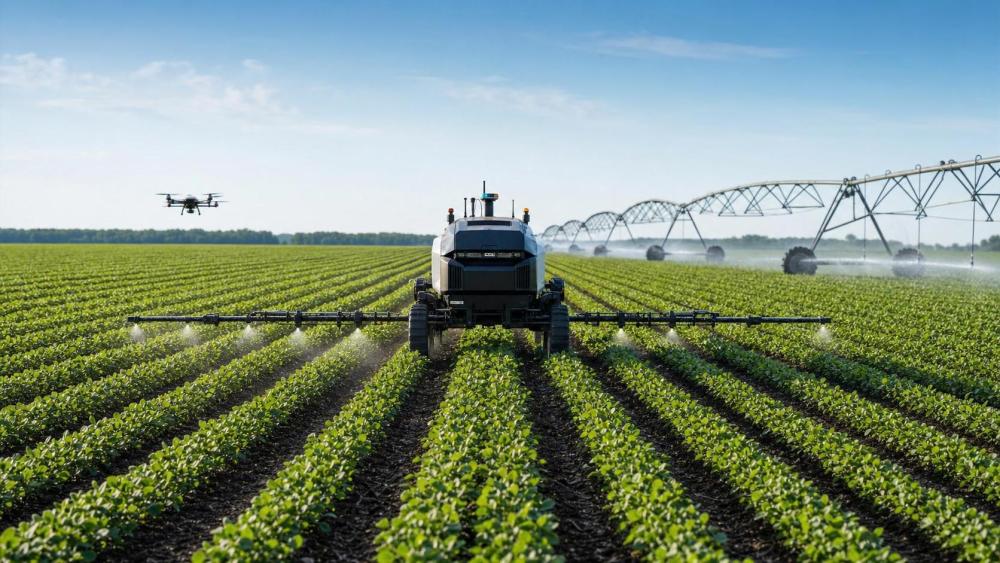
In real farm businesses, the first wins usually come from repetitive, high-acreage, precision-sensitive operations.
These jobs already follow defined routes, timing windows, and machine workflows.
That makes autonomous farming solutions easier to deploy, easier to train, and easier to justify financially.
The deeper question is not whether autonomy matters.
It is which operation delivers the fastest return with the least disruption.
Why Some Operations Benefit Before Others
The strongest early candidates share four traits.
- They are repetitive across large areas.
- They depend on precise path control or dosing.
- They suffer when skilled labor is inconsistent.
- They can be tracked through clear cost and output data.
This is why autonomous farming solutions often start with guidance, spraying, and irrigation.
These areas combine technical maturity with visible economic impact.
By contrast, tasks involving irregular terrain, heavy human judgment, or unpredictable crop conditions usually come later.
1. Field Guidance and Tillage Deliver the Earliest Return
If a farm wants a low-friction entry point, autonomous steering is usually first.
RTK-based guidance on tractors reduces overlap, operator fatigue, and pass-to-pass inconsistency.
For broadacre farms, that improvement scales quickly across tillage, planting preparation, and fertilizer application.
This category benefits first because the operating environment is relatively structured.
Machines already follow planned routes, and field boundaries can be mapped in advance.
That lowers the implementation risk of autonomous farming solutions.
- Reduces seedbed preparation overlap.
- Improves fuel efficiency across long working hours.
- Extends workable hours during peak seasons.
- Supports consistent machine performance across operators.
For many enterprises, this is the operational foundation for broader autonomy later.
Once route control, connectivity, and data logging are stable, more advanced autonomous farming solutions become easier to add.
2. Precision Spraying Is a High-Value Early Use Case
Spraying is one of the clearest examples of where autonomy changes both cost and agronomic outcomes.
Autonomous farming solutions improve route consistency, dosage control, and timing discipline.
That matters because chemical waste, missed zones, and drift risk all carry financial consequences.
Ground sprayers with auto-steer already offer strong value.
Agricultural drones add another layer, especially in irregular plots, wet ground, specialty crops, or labor-constrained regions.
When paired with prescription maps, autonomous farming solutions can focus applications where pressure is highest.
The best early fit often includes:
- Large fields with repeated spray cycles.
- High-value crops needing tighter deposition control.
- Areas with seasonal labor gaps.
- Operations under pressure to document chemical use.
More importantly, spraying delivers visible metrics fast.
Managers can compare input savings, completion speed, coverage quality, and rework rates within one season.
3. Irrigation Control Is Often an Underrated Winner
Irrigation does not always look dramatic, but it is one of the strongest operational fits for autonomy.
That is especially true in water-stressed regions or energy-sensitive production systems.
Smart irrigation combines sensors, automated valves, weather inputs, and remote scheduling.
Among autonomous farming solutions, irrigation stands out because it reduces waste without needing constant field labor.
It also improves consistency, which is critical for crop quality and fertilizer efficiency.
In drip and fertigation systems, the value becomes even more precise.
- Cuts unnecessary water application.
- Improves nutrient delivery timing.
- Reduces manual monitoring rounds.
- Builds auditable records for compliance and planning.
For decision-makers, irrigation autonomy is attractive because payback comes from several directions at once.
Water, labor, crop uniformity, and energy all move in the right direction.
4. Harvest Support Benefits First, Full Harvest Autonomy Later
Harvest is labor-intensive and time-sensitive, so it looks like an obvious target.
But full autonomy in harvesting is harder than guidance or irrigation.
Crop variability, moisture shifts, lodging, and machine coordination create more complexity.
That is why many farms see earlier value from harvest support systems.
Examples include autonomous grain cart coordination, route planning, machine-to-machine synchronization, and yield mapping integration.
These are still autonomous farming solutions, but with lower operational exposure.
A phased approach works best here.
- Start with guidance and machine coordination.
- Add telemetry and live performance tracking.
- Expand toward semi-autonomous harvest workflows.
This reduces risk while preserving the upside of better timing and lower bottlenecks.
5. Post-Harvest and Grain Handling Can Be a Quiet Profit Driver
Some of the most dependable autonomous farming solutions start after the crop leaves the field.
Grain drying, sorting, storage monitoring, and material flow control are highly structured processes.
That makes them excellent candidates for early automation.
This matters more than many buyers expect.
Poor drying control or delayed sorting can erase field gains through spoilage, breakage, or downgraded grain quality.
Autonomous farming solutions in post-harvest settings can protect value already created upstream.
For integrated agribusinesses, these investments may outperform more visible field technologies in the short term.
How to Prioritize Autonomous Farming Solutions
A good decision framework is practical, not theoretical.
The best autonomous farming solutions are not always the most advanced ones.
They are the ones that solve the most expensive bottleneck first.
- Map labor-intensive tasks by season.
- Measure overlap, downtime, waste, and timing losses.
- Check whether data connectivity already exists.
- Rank tasks by payback speed and operational risk.
- Pilot one workflow before scaling widely.
This approach prevents overbuying and underusing technology.
It also helps teams compare autonomous farming solutions on outcomes instead of features alone.
Common Risks in Early Adoption
Early success depends on fit, not hype.
A few mistakes appear often when evaluating autonomous farming solutions.
- Choosing technology before defining the operating problem.
- Ignoring training and change management.
- Assuming all equipment integrates smoothly.
- Expecting full autonomy where semi-autonomy is more realistic.
- Tracking purchase cost, but not workflow savings.
The more grounded signal is this.
Autonomous farming solutions work best when operations, agronomy, machinery, and data teams align early.
Where the First Strategic Moves Should Happen
For most large-scale operations, the first strategic moves are clear.
Start with guidance, spraying, and irrigation if immediate efficiency is the goal.
Add harvest support where coordination losses are high.
Prioritize post-harvest automation where quality preservation drives margin.
That sequence reflects operational reality, not just technology trends.
The strongest autonomous farming solutions are the ones that fit existing workflows while steadily improving them.
In practice, the winning decision is rarely the boldest system.
It is the one that turns labor pressure, precision needs, and timing risk into repeatable operational advantage.
If you are comparing autonomous farming solutions, begin with one bottleneck, one measurable pilot, and one season of disciplined review.
Related News
- 00
0000-00
How to Evaluate an Agricultural Modernization Supplier for a Farm Automation Project - 00
0000-00
How to Size Negative-Pressure Air Inlet Systems for Uniform Poultry House Ventilation - 00
0000-00
How Low-Temperature Grain Dryers Protect Seed Viability and Reduce Cracking - 00
0000-00
How to Evaluate a Tractor Automation Supplier for Retrofit Compatibility and Support - 00
0000-00
What Maintenance Costs Should Be Budgeted for High-Horsepower Tractors?